
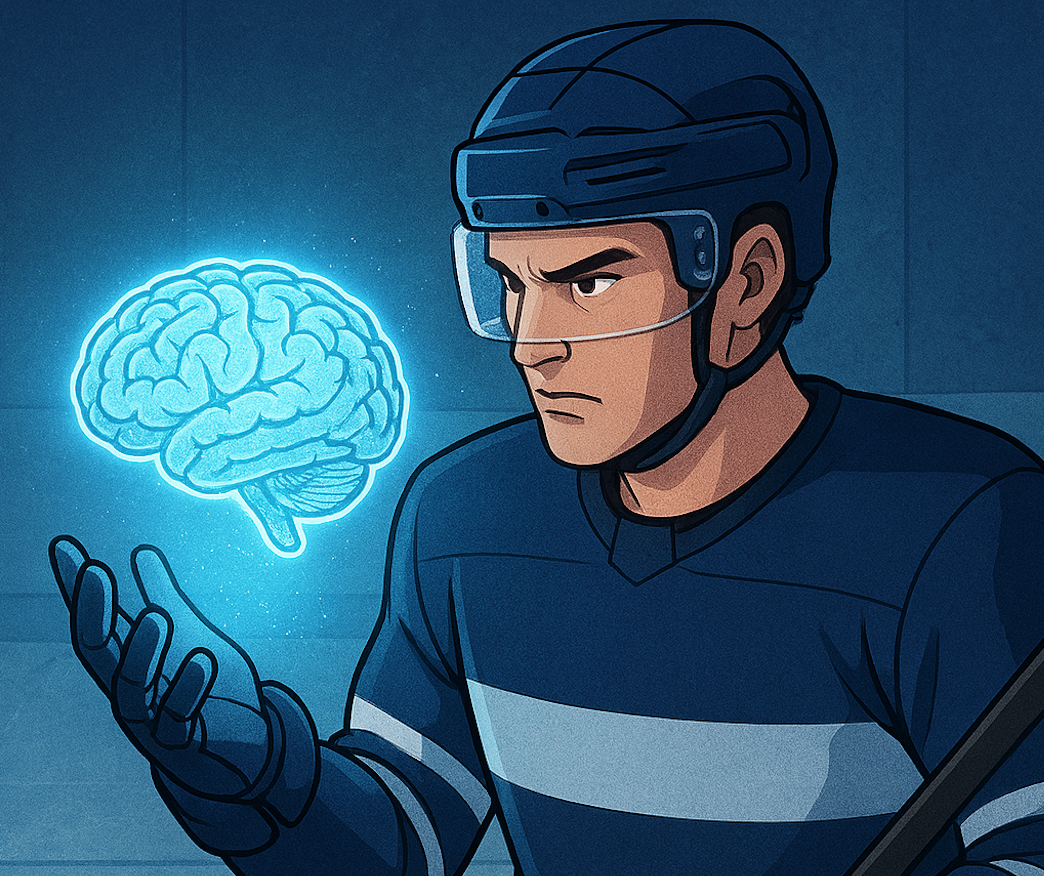
Hockey IQ is one of those terms everyone in the hockey world uses, but few people stop to define clearly. It’s often described as “thinking the game,” but, in reality, hockey IQ is the ability to read situations, anticipate what will happen next, and make the right decision at game speed. You don’t need to be the fastest skater or have the hardest shot to have a high hockey IQ—but players who do tend to make everyone around them better.
The good news? Hockey IQ isn’t just something you’re born with. It can be trained.
What Does High Hockey IQ Look Like?
Players with high hockey IQ consistently seem to be one step ahead of the play. They arrive in open space before defenders realize it’s available. They know when to pass, when to shoot, and when to wait an extra half-second to create a better opportunity.
A classic example from the past is Wayne Gretzky, whose anticipation was legendary. Gretzky famously talked about skating to where the puck was going to be, not where it was. He didn’t overpower opponents physically—he outthought them. His ability to read developing plays allowed him to rack up points in ways that still seem impossible today.
Another historic example is Nicklas Lidström, often called “The Perfect Human.” Lidström rarely made highlight-reel mistakes because he processed the game so efficiently. His positioning, puck decisions, and calm under pressure made difficult plays look effortless.
Modern NHL Examples of Elite Hockey IQ
High hockey IQ is just as critical in today’s faster game. Sidney Crosby is widely praised by coaches and players for his situational awareness. Crosby constantly adjusts his game based on what the defense gives him, whether that means slipping into soft areas, shielding the puck, or making a deceptive pass at the last second.
Connor McDavid is often celebrated for his speed, but his hockey IQ is what truly sets him apart. His ability to process information at top speed allows him to make correct decisions while skating faster than almost anyone else in the league.
Another standout is Nikita Kucherov, whose vision and timing make him deadly even when he’s not moving at full speed. Kucherov excels at manipulating defenders and goalies with subtle dekes and delayed shots—hallmarks of elite hockey IQ.
How Interactive Training Helps Build Hockey IQ
Watching great players is important, but developing hockey IQ requires active training. This is where interactive shooting targets become especially valuable. Instead of repeating the same pre-planned shot, players must react to visual cues, make decisions quickly, and adjust on the fly—just like in a real game.
For example, when a target lights up unexpectedly, a player must recognize the scoring opportunity and execute the shot accurately under time pressure. These mental reps mirror the split-second decisions NHL players make every shift.
Turning Practice Into “Game Thinking”
Interactive shooting targets also reinforce smart shot selection. Players learn that not every shot is equal—sometimes a quick release beats power, and sometimes patience creates a better look. Over time, this builds the habit of thinking before shooting, even when moving at full speed.
Tools like Snipe Lights transform off-ice shooting into cognitive training. Players aren’t just improving accuracy—they’re sharpening awareness, reaction time, and decision-making.
Smarter Training Creates Smarter Players
Hockey IQ is what allows players to thrive when time and space disappear. By learning from high-IQ NHL players and training with interactive tools that demand quick thinking, players can actively develop this crucial skill.
The smartest players don’t just play the game—they carefully study it. And with the right kind of practice, hockey IQ is something anyone can improve.
Related links:
Portable Power: How Snipe Lights Turn Hockey Training into a Real-Life Video Game
How Digital Hockey Shooting Targets Are Changing the Way Players Train
Get Your Kid off the Couch With Snipe Lights: The Interactive Hockey Shooting Target System