
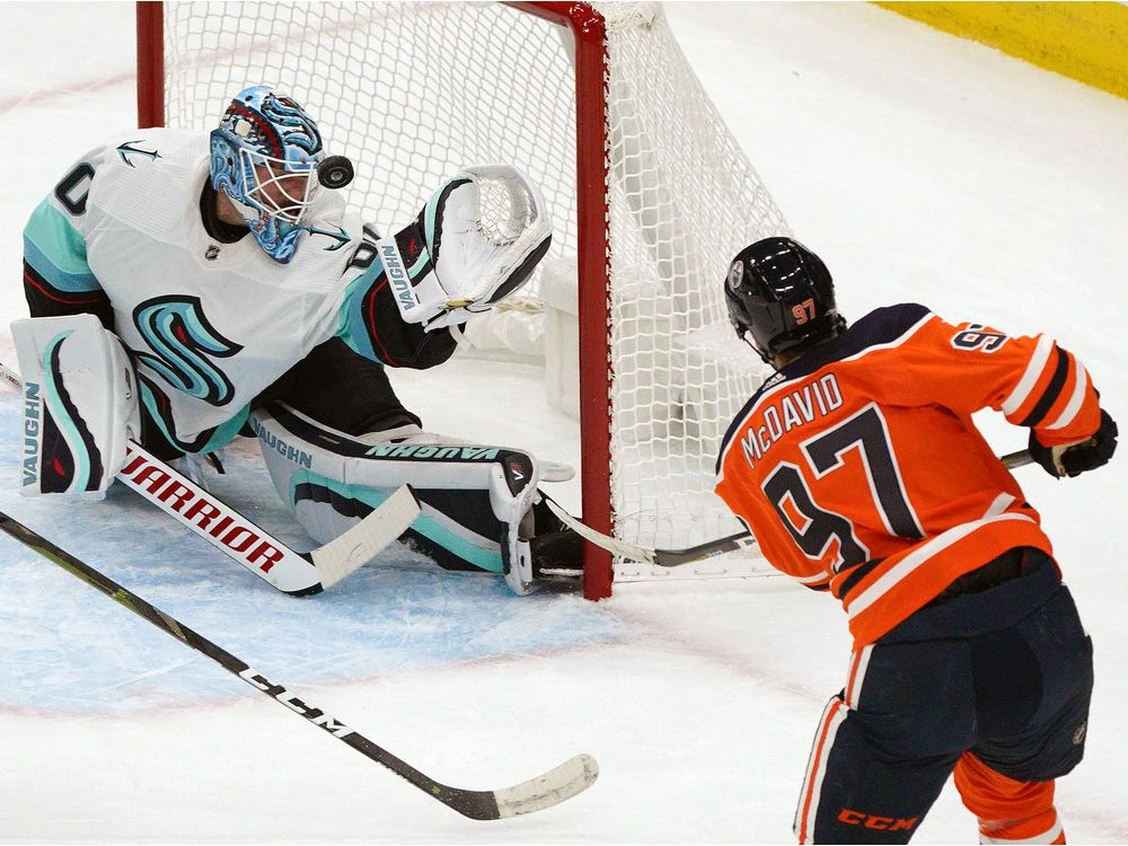
If you’ve played competitive hockey for any length of time, you know goals at the Olympic level aren’t random. They’re the product of timing, pre-shot movement, and exploiting structural tendencies in modern butterfly goaltending.
When you study scoring data and game film from the NHL, Olympics, and other international competitions, clear patterns emerge. Certain areas of the net continue to produce — not because shooters lack creativity, but because they understand biomechanics, goalie depth management, and lateral recovery limitations.
Here are the five areas that consistently generate offense at the highest level — and why they still work.
We apologize in advance to all of you goalies out there!
1. High Glove (Over the Lead Shoulder)
Despite advances in goalie training, high glove remains one of the most targeted scoring locations.
Why it continues to convert:
- Goaltenders drop early to seal the ice.
- Upward glove recovery works against downward butterfly momentum.
- Cross-slot passes force extended glove reach under rotation.
Many high-glove goals aren’t full wind-up shots. They’re quick-release wristers from the interior hashmarks after east-west puck movement. The shooter limits load time, elevates through a compact motion, and exploits the split second before full hand reset.
Training Focus:
Rep quick-release shots from inside the dots with minimal cradle time. Prioritize release speed and elevation control over raw velocity.
2. High Blocker (Short-Side and Far-Side)
High blocker doesn’t get the same spotlight as glove side, but it’s attacked just as deliberately.
Why it works:
- The blocker deflects rather than traps.
- Small shoulder positioning gaps appear during depth adjustments.
- Hand separation increases during lateral pushes.
On off-wing entries, shooters frequently target high blocker when the goalie is retreating slightly into the crease. Even subtle backward movement increases vertical exposure.
Training Focus:
Alternate high-glove and high-blocker sequences in the same drill. Add deception — slight weight shifts or eye misdirection — before release to delay hand commitment.
3. Low Far Side (Across-Body Finish)
Low far side remains a high-percentage finish, especially off the rush.
Why it converts:
- Goalie momentum is tracking puck-side.
- The trailing pad must extend laterally while sealing ice.
- Edge control degrades slightly during long pushes.
This location becomes particularly dangerous when shooters adjust their release angle just inside the dots, forcing the goalie into a longer lateral extension. Even at the highest levels, sealing the far pad perfectly during movement is mechanically demanding.
Training Focus:
Rep lateral movement into shot. Start wide, cut inside, and release in stride without fully resetting your weight transfer.
4. Five-Hole (Timing-Dependent)
Five-hole goals at the elite level are often situational, not volume-based.
You rarely see clean, stationary five-hole attempts beat a set goaltender. Instead, they appear during:
- Butterfly transitions
- East-west recovery pushes
- Net-front rebounds
- Delayed releases after a fake high shot
The opening exists during pad closure and rotational recovery — often for fractions of a second.
Training Focus:
Simulate rebound sequences. Shoot high to force butterfly, then immediately follow with a low release. Train recognition and stick readiness, not premeditated low shots.
5. Interior Slot (Mid-Elevation Quick Release)
The slot remains the most dangerous scoring area in elite hockey — not just because of proximity, but because of time compression.
Many goals originate from:
- Cross-seam passes
- Low-to-high-to-middle puck movement
- One-touch releases before defensive rotation resets
The real advantage isn’t just shot placement — it’s pre-shot lateral movement. When the puck travels east-west, the goalie must rotate, push, and reset their angle simultaneously. That creates small but meaningful exposure in both upper quadrants and mid-elevation just above the pads.
Training Focus:
Incorporate one-touch shooting with unpredictable cues. Remove the ability to predetermine target location and force reactive release decisions.
Conclusion
When you analyze scoring trends from the best players in the world, three themes stand out:
- Upper corners remain vulnerable in butterfly-based systems.
- Lateral puck movement dramatically increases conversion rates.
- Release speed often matters more than shot velocity.
At this level, most goaltenders are positionally sound. Beating them rarely comes from simply overpowering them. It comes from forcing movement, shrinking their reaction window, and targeting the small structural gaps that appear during transitions.
For experienced players, this shifts practice away from simple shot volume and toward context-based repetition:
- Shooting in stride
- Shooting immediately off reception
- Alternating high and low unpredictably
- Replicating east-west puck movement
Dynamic training reinforces something competitive players already understand intuitively:
Goals are created in motion — and finished in the small windows that movement creates.
Train for those windows with interactive hockey shooting targets like Snipe Lights, and your scoring approach starts to look a lot more like what wins on the biggest stage.
Related links:
What Is Hockey IQ and How Can I Improve Mine?
Portable Power: How Snipe Lights Turn Hockey Training into a Real-Life Video Game
The Importance of Using Interactive Targets Instead of Shooting on Empty Nets in Practice