
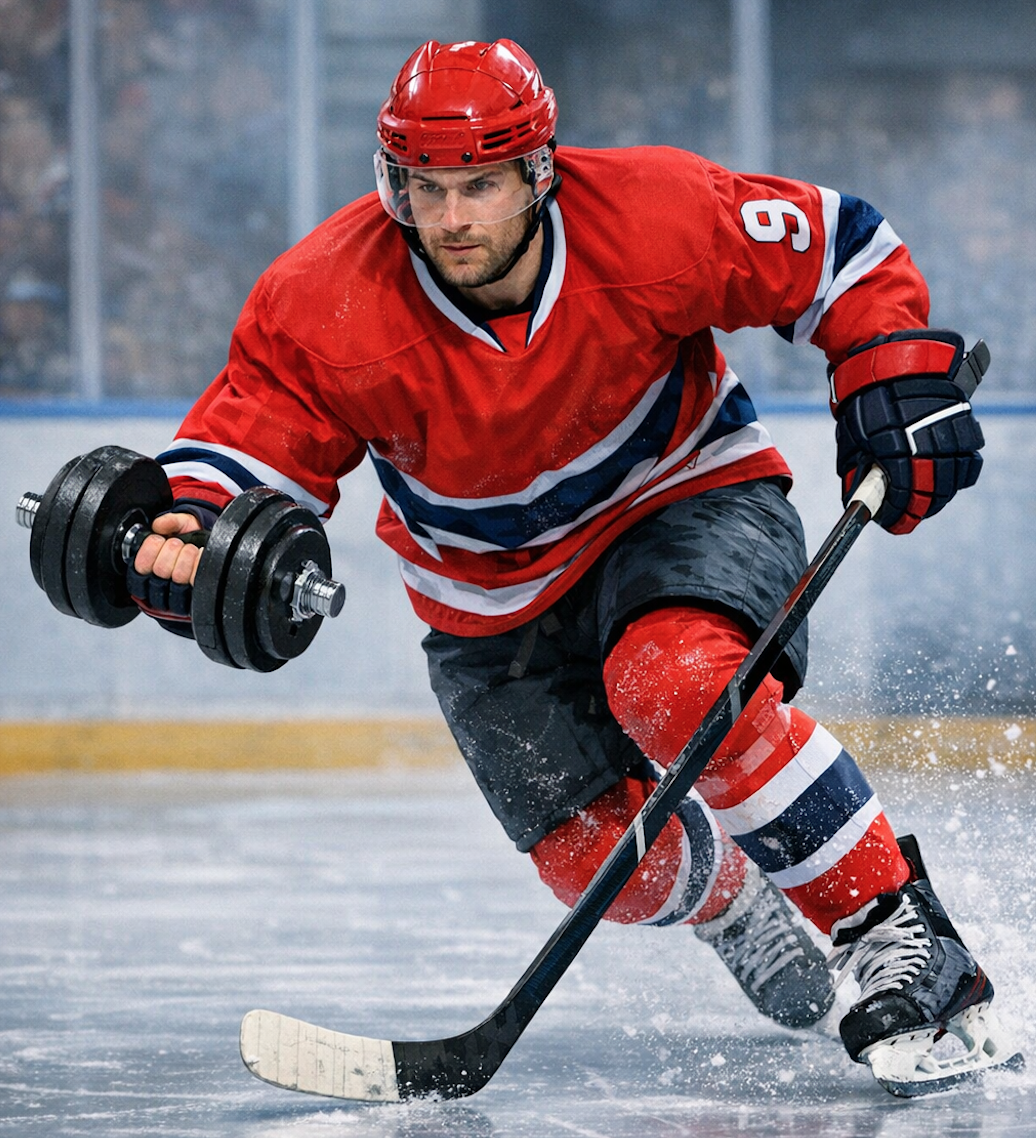
If you’re looking for a sport that builds strength, endurance, coordination, and mental toughness—all while being genuinely fun—hockey is hard to beat. Hockey requires a unique mix of explosive athletic movement, strategic thinking, and teamwork. Whether you’re playing in a competitive league or just joining a local pickup game, the sport offers one of the most complete workouts available.
Unlike a lot of traditional gym routines that isolate individual muscle groups, hockey demands that your entire body works together. Every stride, shot, and shift on the ice engages multiple muscle systems at once, turning each game into a powerful full-body training session.
Let’s take a closer look at why hockey is such an effective path to overall physical fitness.
A True Full-Body Workout
Ice hockey engages nearly every major muscle group in your body. Skating alone requires balance, coordination, and continuous lower-body activation.
During a typical game or practice, players develop strength and conditioning in several key areas:
Lower Body Power
- Quadriceps and hamstrings drive each skating stride
- Glutes generate explosive acceleration and stopping power
- Calves stabilize the ankle and assist with edge control
Core Strength
- Core muscles stabilize the body during skating and contact
- Rotational power comes from the core when shooting or passing
- Even stationary balance on skates requires constant core engagement
Upper Body Strength
- Shoulders and arms control the stick for passing, shooting, and stickhandling
- Upper body strength helps players win battles along the boards
- Back muscles assist with posture and puck control while skating
Because hockey involves short bursts of intense effort followed by brief recovery periods, it also functions as a powerful form of high-intensity interval training (HIIT).
Benefits include:
- Increased cardiovascular endurance
- Improved anaerobic capacity
- Efficient calorie burning
- Enhanced agility and coordination
The Importance of Training Off the Ice
While playing games is exciting, effective hockey players understand that training away from the rink is just as important.
Off-ice training helps develop the physical qualities needed to perform at a high level on the ice.
Common off-ice training elements include:
- Strength training to build leg power and upper-body stability
- Plyometric exercises to improve explosiveness and quick direction changes
- Balance and stability drills that translate directly to skating control
- Stickhandling and shooting practice to refine technical skills
Dedicated training allows players to build muscle, improve endurance, and reduce injury risk. It also gives athletes the chance to focus on specific skills that may not get as much attention during games.
For shooting development in particular, many players now use interactive shooting targets that provide immediate feedback and simulate real scoring situations. Systems like the interactive, light-up targets from Snipe Lights can add a competitive element to practice by forcing players to react quickly and hit specific spots, helping reinforce accuracy and decision-making in a way that feels closer to real gameplay.
Consistent practice and conditioning make the difference between simply playing hockey and truly improving as a player.
Why Real Game Experience Matters
Training is essential—but nothing fully replicates the physical and mental demands of a real game.
Game situations force players to combine everything they’ve practiced:
- Skating speed
- Decision-making under pressure
- Puck control
- Tactical awareness
In a game environment, players must react instantly while maintaining endurance throughout multiple shifts. This creates a unique athletic challenge that builds both physical fitness and mental resilience.
Games also develop skills that can’t be learned alone, such as:
- Reading opponents and anticipating plays
- Real-time communication with linemates
- Managing fatigue during intense shifts
The combination of practice and game play is what makes hockey such a powerful training system.
Building Teamwork and Self-Discipline
Beyond physical fitness, hockey teaches life skills that extend well beyond the rink.
Because success depends on five skaters moving and thinking as one unit, players quickly learn the importance of teamwork and accountability.
Hockey naturally builds:
Teamwork
- Players must trust and support their teammates
- Success comes from coordinated effort, not individual performance
- Communication and awareness are critical
Self-Discipline
- Players must commit to training and improvement
- Showing up for practices and games builds responsibility
- Managing emotions during intense competition develops mental toughness
These qualities benefit athletes in school, careers, and everyday life.
Fitness That Never Feels Like a Chore
One of the biggest reasons hockey is such an effective fitness activity is simple: it’s fun.
When you’re chasing the puck, battling for position, and celebrating goals with teammates, you rarely think about the physical work you’re doing. Yet by the end of a game, you’ve completed an intense full-body workout that would be difficult to replicate in a typical gym session.
Players develop:
- Strength
- Endurance
- Coordination
- Speed
- Mental resilience
—all while enjoying the fast-paced excitement of the game.
But players can still have tons of fun even outside of practice with hockey target video games like Snipe Lights. Sports psychologists have been endorsing gamification in training for years, and it’s never been easier to incorporate it into your workouts.
The Perfect Balance of Training and Competition
Hockey offers something unique: a sport where training and play reinforce each other. Skill development improves performance in games, while real competition reveals the areas players need to train.
This cycle of practice, play, and improvement keeps athletes engaged while steadily building fitness and skill.
For anyone serious about physical fitness, hockey simply delivers. It forces players to stay active, challenge their bodies, and develop meaningful life skills along the way.
And it’s a heckuva lot of fun!
Related links:
What Is Hockey IQ and How Can I Improve Mine?
How Interactive Hockey Training Targets Can Transform Backyard, Driveway, or Basement Practice
How Snipe Lights Interactive Hockey Shooting Targets Compare to Normal Hockey Shooting Targets