
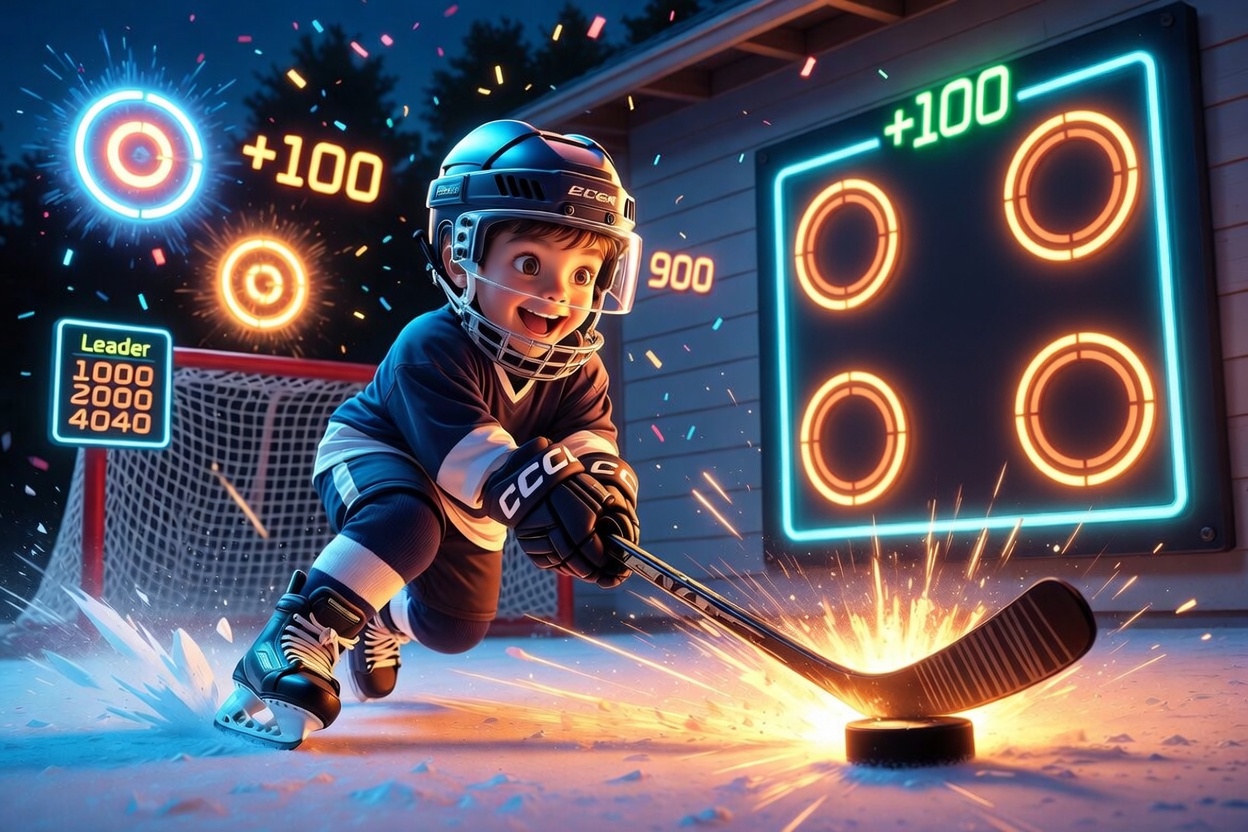
If you’ve spent any time around youth hockey lately, you’ve probably noticed a major shift in how players train. Traditional shooting drills and repetitive stickhandling exercises still matter, but more players, coaches, and hockey families are turning toward gamified hockey training systems like Snipe Lights to make skill development more engaging, measurable, and effective.
At the center of this shift are digital hockey targets—interactive training systems designed to provide instant feedback, competitive challenges, and game-like pressure during practice.
For players trying to improve their shot accuracy, reaction time, hockey IQ, and consistency, this style of training offers something traditional drills often lack: engagement.
And when players are more engaged, they typically practice harder, longer, and with greater focus.
What Is Gamified Hockey Training?
Gamified hockey training uses game mechanics—such as scoring systems, reaction-based challenges, timed drills, leaderboards, and competitive objectives—to make hockey practice more interactive and rewarding.
Instead of simply shooting pucks at static targets, players participate in drills that require:
- Fast decision-making
- Hand-eye coordination
- Precision shooting
- Quick reactions
- Situational awareness
- Competitive focus under pressure
This approach helps transform repetitive training into an experience that feels closer to real gameplay.
Digital hockey targets are one of the fastest-growing tools in this category because they combine skill development with immediate visual feedback. Players can instantly see whether they hit the correct target, how quickly they reacted, and how consistently they performed.
Why Interactive Hockey Training Works
One of the biggest challenges in hockey development is maintaining high-quality repetitions.
Young players often lose focus during repetitive drills, especially when practicing alone. Over time, this can reduce the intensity and effectiveness of training sessions.
Interactive hockey training changes that dynamic.
By introducing reaction-based exercises, scoring systems, and real-time feedback, players become more mentally invested in each repetition. Instead of mindlessly shooting pucks, they actively compete against time, previous scores, teammates, or themselves.
This creates several important benefits:
Increased Practice Time
Players are naturally more motivated to continue training when sessions feel engaging and competitive.
Better Focus
Interactive drills require players to pay attention, react quickly, and execute under pressure.
More Realistic Training
Hockey games are unpredictable and fast-paced. Reaction-based training helps simulate those conditions more effectively than static drills.
Faster Skill Development
Immediate feedback helps players quickly identify areas for improvement and build muscle memory through repetition.
The Role of Digital Hockey Targets in Modern Skill Development
Digital hockey targets are designed to bring structure, challenge, and measurable progression into hockey training.
Unlike traditional targets that simply provide something to shoot at, digital systems respond dynamically to the player’s actions.
With Snipe Lights, players can train using interactive light-up hockey targets that support multiple game modes and reaction-based exercises.
These systems are commonly used for:
- Hockey shooting accuracy training
- Quick-release development
- Passing drills
- Reaction speed training
- Solo hockey practice
- Small-area competitive drills
- Team skill sessions
- Off-ice hockey training
Because the targets illuminate randomly or according to specific game modes, players must process visual information quickly and react in real time.
That combination of cognitive processing and physical execution is one reason gamified hockey training has become increasingly popular among hockey coaches and development programs.
How Gamified Hockey Training Improves Shooting Accuracy
Shooting accuracy is one of the most obvious benefits of digital hockey targets.
Traditional shooting practice often lacks accountability. Players may take hundreds of shots without truly tracking accuracy or consistency.
Interactive targets change that.
When players aim for illuminated scoring zones, every shot has a clear objective. This encourages:
- Better shot placement
- Faster puck release timing
- Improved visual tracking
- Consistent shooting mechanics
- Increased shooting confidence
Over time, players learn to shoot more accurately under pressure instead of simply taking high volumes of low-focus shots.
This is especially valuable because scoring opportunities in real games are often brief and unpredictable.
Why Reaction Training Matters in Hockey
Modern hockey is built around speed.
Players must constantly process visual information, react to changing situations, and make split-second decisions.
Reaction training helps develop these skills by forcing players to respond quickly to visual cues.
Digital hockey targets naturally support this style of development because the targets activate dynamically rather than remaining static.
This trains players to:
- Recognize visual patterns quickly
- React under time pressure
- Improve coordination between eyes and hands
- Transition faster between movements
- Build composure during high-speed situations
These skills can translate directly to gameplay situations such as rebounds, quick passing sequences, puck retrievals, and rapid shooting opportunities.
Solo Hockey Practice Becomes More Effective
One major advantage of digital hockey targets is that they improve solo hockey training.
Practicing alone can sometimes become repetitive and unstructured, especially for younger players.
Interactive systems help solve this problem by giving players built-in objectives, timing systems, and measurable challenges.
Instead of simply shooting around, players can work through structured game modes that encourage repetition with purpose.
This makes off-ice hockey training more productive and often more enjoyable.
For hockey parents, that can also mean less need to constantly create drills or keep players motivated during practice sessions.
Why Coaches Are Embracing Interactive Hockey Training
Many hockey coaches now use digital hockey targets during team practices and skill development sessions.
One reason is versatility.
Interactive systems can be adapted for players at different age levels and skill levels. Coaches can create drills focused on:
- Passing accuracy
- Shooting under pressure
- Reaction speed
- Team competitions
- Conditioning drills
- Small-area games
- Warm-up exercises
Gamified drills also help increase practice intensity.
Players tend to compete harder when drills involve reaction timing, scoring, or leaderboard-style challenges.
That increased engagement often leads to better energy levels during practices and more repetitions completed at game speed.
The Psychology Behind Gamified Training
There is also a psychological component behind why gamified hockey training works so well.
Gamification taps into several motivational principles:
- Immediate rewards
- Clear goals
- Measurable progress
- Competitive feedback
- Skill mastery
- Intrinsic motivation
Instead of viewing practice as repetitive work, players begin seeing development as a challenge to improve scores, complete objectives, and master new game modes.
This can be especially effective for younger players who may struggle with maintaining focus during traditional training routines.
Off-Ice Hockey Training Is Becoming More Important
Today’s hockey players are increasingly looking for ways to develop skills outside of organized practices.
Ice time can be expensive and limited, making off-ice hockey training an important part of long-term development.
Digital hockey targets allow players to work on:
- Shooting mechanics
- Stickhandling reactions
- Hand-eye coordination
- Passing accuracy
- Quick decision-making
without requiring full team practices or scheduled ice sessions.
This flexibility helps players maintain consistency in their development throughout the year.
Choosing the Right Digital Hockey Training System
Not all hockey training tools are designed the same way.
When evaluating digital hockey targets, players and parents should consider:
Durability
Hockey equipment takes abuse. Snipe Lights withstand repeated shots from players of different ages and skill levels.
Game Modes
Variety matters. Multiple training modes help keep players engaged and support different skill-development goals.
Ease of Setup
Simple setup makes it easier to train consistently.
Portability
Portable systems allow players to train in driveways, garages, basements, training facilities, and shooting pads.
Skill Progression
The best systems challenge players as they improve rather than becoming repetitive.
With Snipe Lights, players can explore interactive hockey targets designed specifically for gamified hockey training and reaction-based development.
The Future of Hockey Training
Technology continues to reshape hockey development.
As players seek more efficient, engaging, and measurable ways to improve their skills, interactive hockey training tools will likely become even more common.
Digital hockey targets represent part of a broader shift toward smarter training systems that combine athletic development with real-time feedback and cognitive engagement.
For players trying to improve shooting accuracy, reaction time, and consistency, gamified hockey training offers a modern approach that keeps development challenging and enjoyable.
Final Thoughts
Gamified hockey training is more than just a trend.
It reflects a growing understanding that players develop skills more effectively when training is interactive, competitive, and engaging.
Digital hockey targets help bridge the gap between repetitive drills and realistic gameplay situations by introducing reaction-based challenges and measurable feedback.
Whether used for solo hockey practice, team drills, or off-ice skill development, interactive hockey targets can help players stay motivated while building the core skills required for today’s fast-paced game.
To learn more about interactive digital hockey targets and reaction-based hockey training systems, visit our blog here.
Related links:
What Is Hockey IQ and How Can I Improve Mine?
Why Hockey Is One of the Best Full-Body Workouts You Can Get
Where Elite Players Actually Beat Goaltenders: Scoring Patterns at the Highest Level