
When the final buzzer sounds and the hockey season comes to an end, many players breathe a sigh of relief. Practices stop, games disappear from the calendar, and it’s tempting to trade sticks and pucks for vacations and video games. While taking a short break is healthy, summer is actually the single most important season for long-term hockey development. It’s the time when players build the skills that separate them from the competition once the season returns.
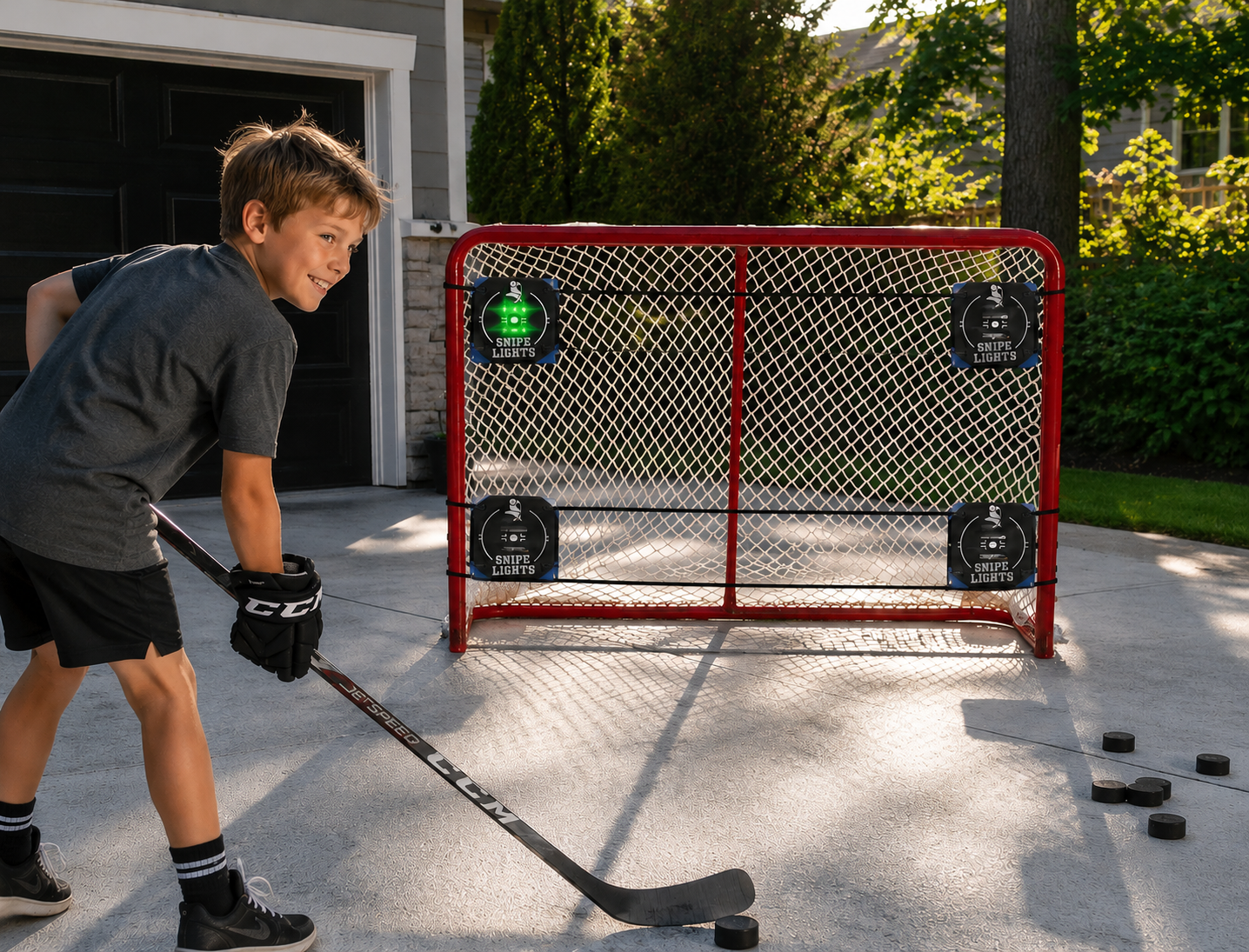
That’s why so many players and families use interactive hockey training tools like Snipe Lights throughout the offseason. By turning repetitive shooting practice into an engaging, game-based experience, players are more likely to stay consistent with their training, retain important skills, and continue improving even when they aren’t on the ice.
Why the Summer Months Matter So Much
During the hockey season, a lot of players spend much of their time preparing for games rather than developing new skills. Team practices focus on systems, line combinations, special teams, and game strategy. Coaches simply don’t have enough ice time to dramatically improve every player’s shooting mechanics, puck control, or stickhandling.
Summer changes everything.
Without weekend tournaments and multiple weekly games, players can focus on individual development. Instead of practicing to win the next game, they can practice becoming a better hockey player for the next several years.
Many elite players credit their offseason work—not their in-season practices—as the biggest reason they continued climbing to higher levels of hockey.
The Science of Skill Retention
One of the biggest reasons summer training matters is something called skill retention.
Motor skills, such as shooting a hockey puck accurately, are stored through repeated movement patterns. The more consistently players perform a movement correctly, the stronger those neural pathways become.
Unfortunately, the opposite is also true.
When players stop practicing entirely for several months, those pathways begin to weaken. While players won’t completely forget how to shoot or stickhandle, their timing, coordination, reaction speed, and accuracy often decline.
This phenomenon is sometimes called detraining, and it affects athletes in nearly every sport.
When fall practices begin, players who took the entire summer off often spend several weeks simply regaining the skills they already had the previous season. Meanwhile, players who continued practicing throughout the offseason are already building upon their existing abilities instead of starting over.
Consistency Beats Marathon Practice Sessions
Many parents believe their child needs hours of practice every day to improve.
Research on motor learning suggests otherwise.
Short, frequent practice sessions are generally more effective than occasional marathon workouts.
For example:
- Fifteen to twenty minutes of shooting four or five days per week can produce better long-term improvement than one two-hour session each weekend.
- Frequent repetition strengthens muscle memory.
- Smaller sessions reduce mental fatigue while maintaining focus and quality.
This approach also fits naturally into busy summer schedules filled with vacations, camps, and family activities.
Summer Is the Perfect Time to Improve Shooting
Shooting is one of the easiest hockey skills to develop during the offseason because it requires very little space and minimal equipment.
Players can work on:
- Wrist shot mechanics
- Snapshot release speed
- One-timers
- Backhand shots
- Shooting accuracy
- Quick release timing
- Shooting under pressure
Unlike skating, which requires ice time, shooting can be practiced almost anywhere with the right setup. A hockey net, a shooting pad, and a set of Snipe Lights is all you need.
Every quality repetition builds confidence while reinforcing proper mechanics.
Building Confidence Through Repetition
Confidence isn’t something players magically develop.
It’s earned through successful repetitions.
When players consistently hit small targets during practice, they begin trusting their shot during games. Instead of hesitating before shooting, they react instinctively.
That confidence often leads to:
- Faster decision making
- More shot attempts
- Better scoring opportunities
- Improved offensive creativity
Players who know they can hit their target are more willing to shoot in high-pressure situations.
Summer Allows Players to Experiment
Game seasons leave little room for trial and error.
Players naturally rely on the skills they’re already comfortable using because mistakes can cost goals or wins.
During the offseason, there’s no scoreboard.
Players can safely experiment with:
- Different shot releases
- Hand positioning
- Weight transfer
- Deception techniques
- Shooting from difficult angles
- Receiving and releasing pucks more quickly
Learning through experimentation often produces breakthroughs that carry into the regular season.
Physical Development Supports Skill Development
Summer isn’t only about shooting pucks.
It’s also the ideal time to build athleticism.
Age-appropriate offseason training may include:
- Balance
- Coordination
- Core strength
- Mobility
- Explosive power
- Hand-eye coordination
These physical improvements help players execute hockey skills more efficiently once they return to the ice.
A stronger, more athletic player often develops hockey skills faster because their body can perform movements with greater control and consistency.
Why Making Practice Fun Matters
One challenge many families face is keeping young players motivated all summer.
Repeating the same shooting drill hundreds of times quickly becomes boring.
Sports psychology research consistently shows that athletes stay engaged longer when practice includes immediate feedback, clear goals, and an element of challenge like the multiple game modes on Snipe Lights.
Gamified practice naturally encourages players to shoot more pucks without feeling like they’re completing a chore.
When athletes enjoy practicing, consistency becomes much easier to maintain.
Small Improvements Add Up
Imagine a player taking just 100 quality shots four days each week during a 12-week offseason.
That’s nearly 5,000 purposeful shooting repetitions before the next season even begins.
Each shot reinforces mechanics, improves accuracy, and builds confidence.
Those improvements rarely happen overnight.
Instead, they accumulate gradually until parents and coaches suddenly notice that the player looks faster, shoots harder, and scores more often than they did just a few months earlier.
Summer Is the Perfect Time to Cross-Train With Other Sports
Without school days on the calendar for a while, summer provides a great opportunity for young players to develop their overall athletic abilities by cross-training. Sports like lacrosse, soccer, basketball, baseball, and football all use the same athletic skills that can be useful to a hockey player.
Whether it’s through casual pick-up games or organized leagues, all of these sports provide added lessons in teamwork, coordination, improved stamina, and a full-body workout.
Plus, it keeps kids from plopping down on the coach in front of the TV and losing all that momentum they built up during the hockey season!
The Bottom Line
Summer isn’t a break from hockey development—it’s the season where the biggest gains are often made. Players who continue practicing during the offseason retain their skills, strengthen muscle memory, build confidence, and enter the new season ready to improve instead of simply catching up.
By making shooting practice engaging and consistent with interactive training tools like Snipe Lights, players are far more likely to stay motivated throughout the summer and arrive at tryouts sharper, more accurate, and better prepared for their best season yet.
Related links:
How NHL Players Train In The Offseason
Gamified Hockey Training Explained: How Digital Hockey Targets Improve Skill Development